Home Project Experience Redesign
Designing for the way home projects really unfold
- Company
- Quartermaster
- TIMELINE
- 2025–2026
Design complete · Partially implemented - Role
- Lead Product Designer

Overview
Quartermaster connects Toronto homeowners with contractors (Pros) recommended by their neighbours. By 2025, AI-assisted intake and automated matching had changed how projects began, but everything after that was still built around a one-time transaction: quote, book, pay and review, in that order, in a workspace originally designed for desktop and later adapted to mobile. There was no way to save a draft or pause a project, and recurring services weren’t supported, even though they were central to Quartermaster’s ongoing relationship with homeowners.
Real projects didn’t move in a straight line. Cleanings repeat, renovations are paid in stages, quotes get revised and visits get rescheduled. The model had to handle all of that while showing homeowners where their project stood and what to do next.
The technical rebuild gave us the opportunity to change the experience. I led the research and end-to-end design of the homeowner experience across web and mobile, connecting Pro selection, booking, payments and feedback within a more flexible project workspace. The experience was designed to accommodate how projects evolve and how relationships with Pros continue beyond a single job.
From a fixed sequence to a flexible project structure
I structured quotes, visits, payments and chat as independent activities within a shared project. What homeowners saw depended on the relevance of each activity, rather than where it fell in a sequence:
- Needs attention: Actions and changes requiring the homeowner’s response.
- Supports a decision: Quotes, conversations and details needed to evaluate options.
- Available for reference: Completed activities, records and history.
This allowed multiple activities to happen in parallel while keeping the most relevant information in focus.
Bringing contractor selection into one context
Before booking, homeowners compare contractors, discuss requirements, review profiles and evaluate quotes. Previously, these activities were spread across separate screens, requiring homeowners to move between them to assess each option.
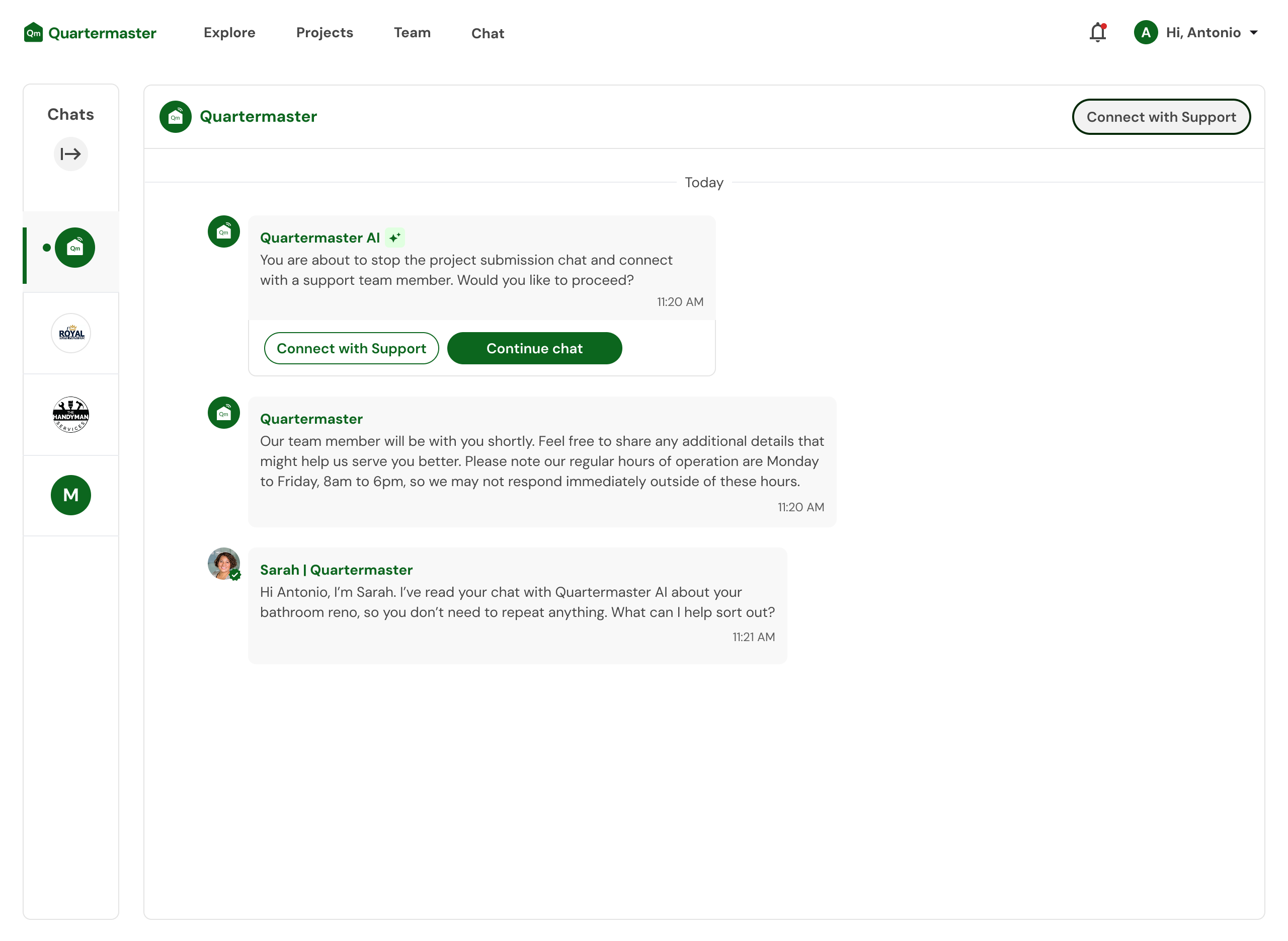
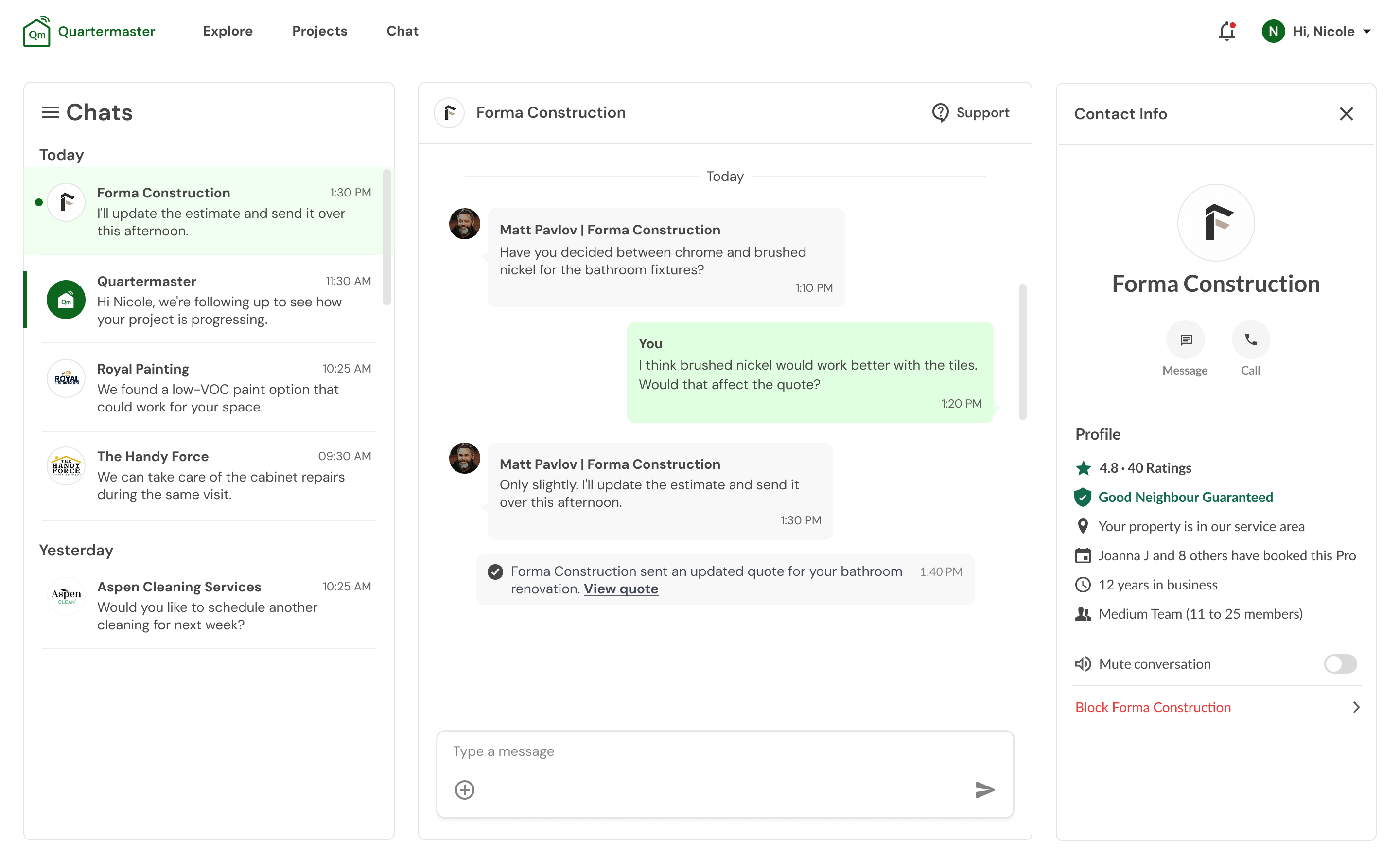
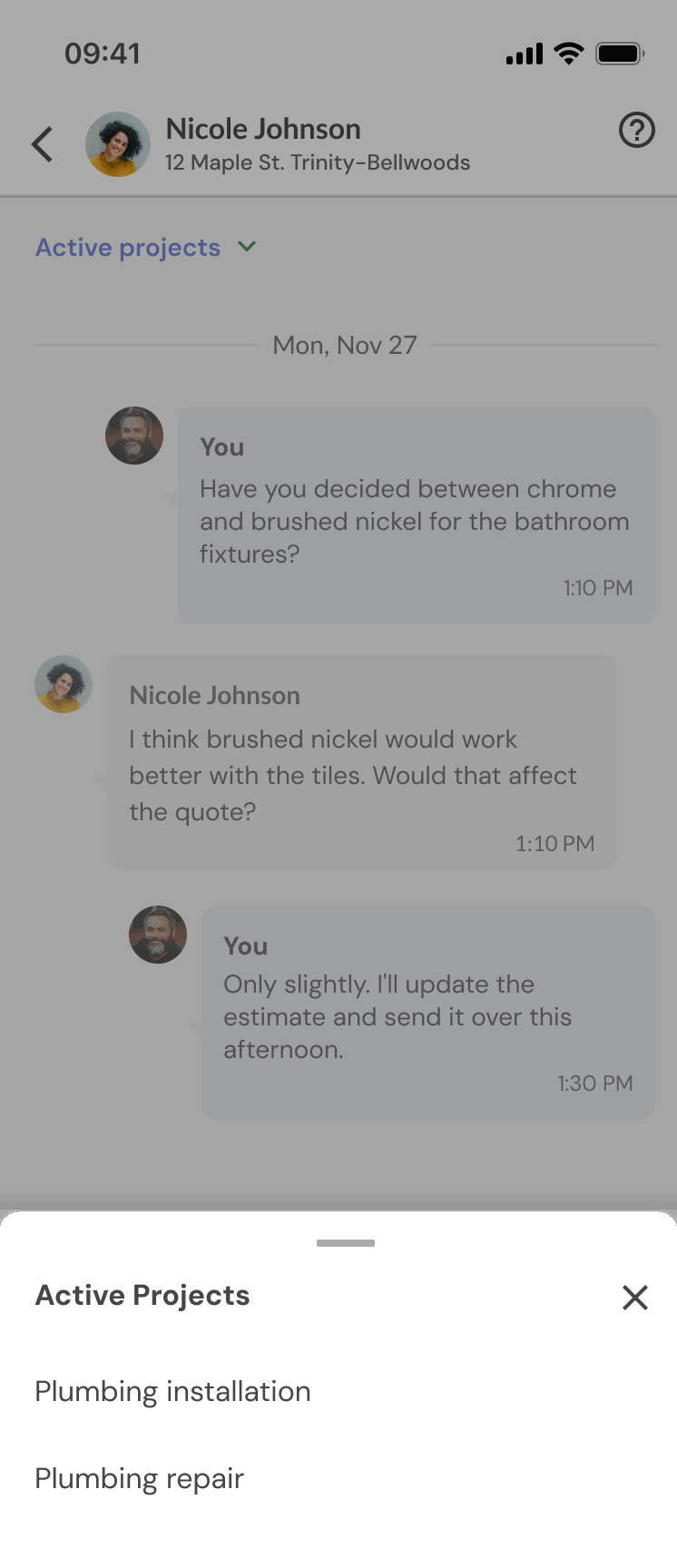
I brought each Pro’s profile, quote and conversation into a dedicated panel, keeping the broader selection of Pros accessible within the project. Testing revealed different navigation preferences across platforms. On web, participants tended to review one Pro at a time, while some mobile participants preferred switching directly between Pros. We designed different navigation patterns for each platform rather than forcing the same interaction across both.
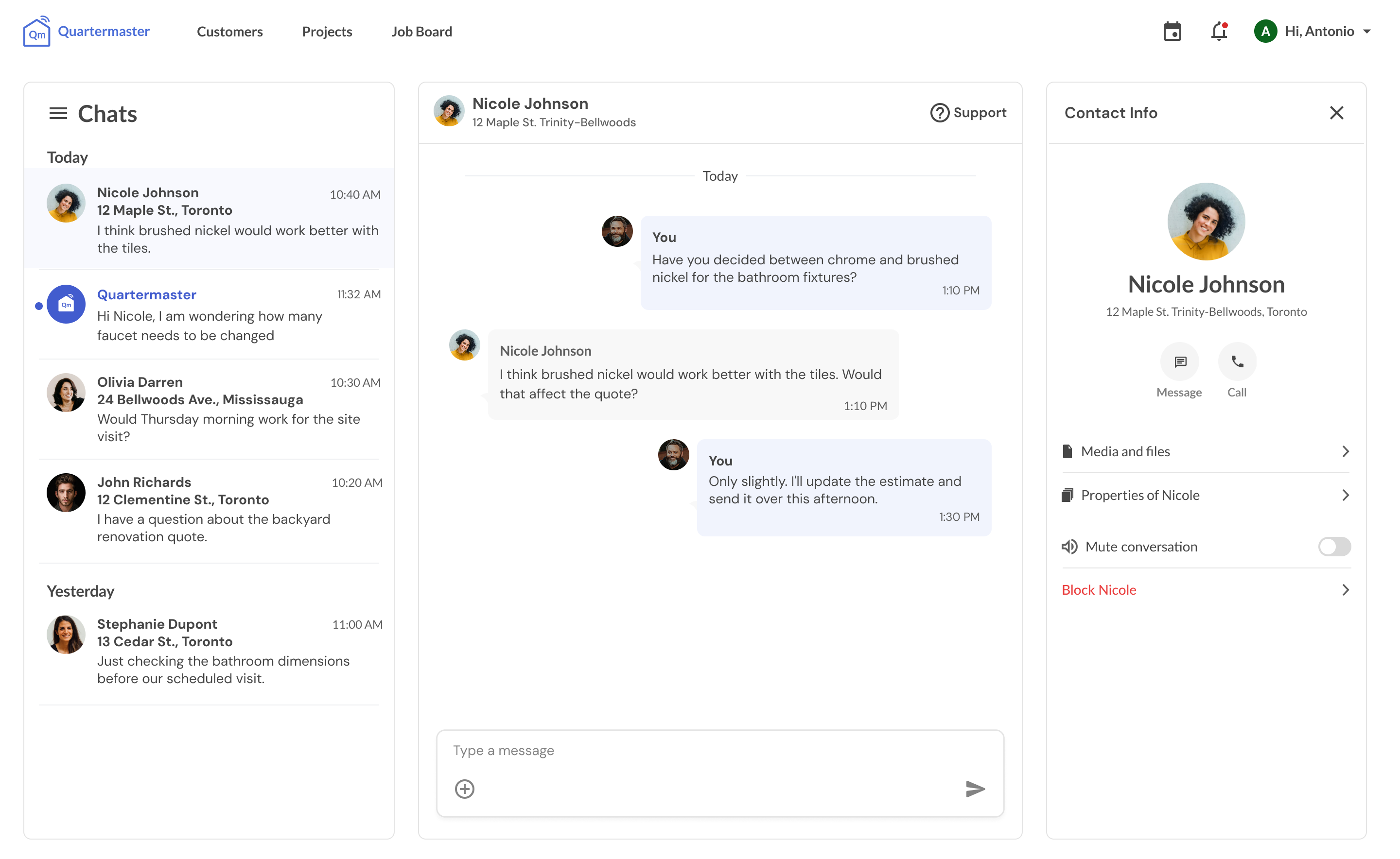
Messages belonged with the contractor
One project, multiple timelines
A recurring cleaning can have twenty past visits, one coming up, and a payment due. Visits and payments follow different schedules, so combining them into a single timeline would have buried whatever homeowners needed to act on.
I organized visits and payments around what’s due, what’s coming up and what’s already happened. Each card brings the most relevant information forward while keeping upcoming and past activities accessible. A cancelled visit moves to previous visits without affecting the next scheduled visit. For payments, homeowners can see what’s due, what’s been paid and what remains without having to piece together the full payment history. The structure had to hold at both extremes: a biweekly cleaning on its twentieth visit and a renovation on its third payment.
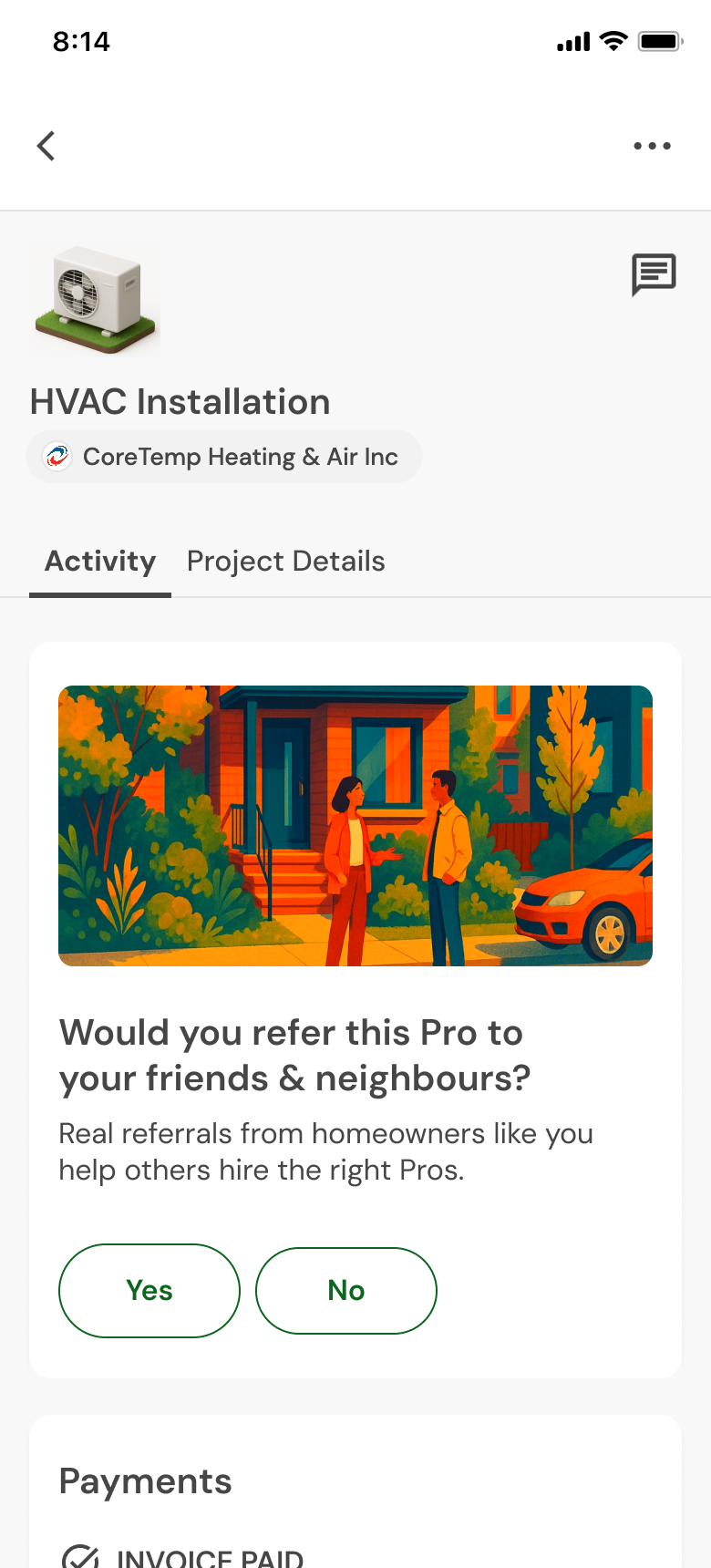
Feedback at any point after booking
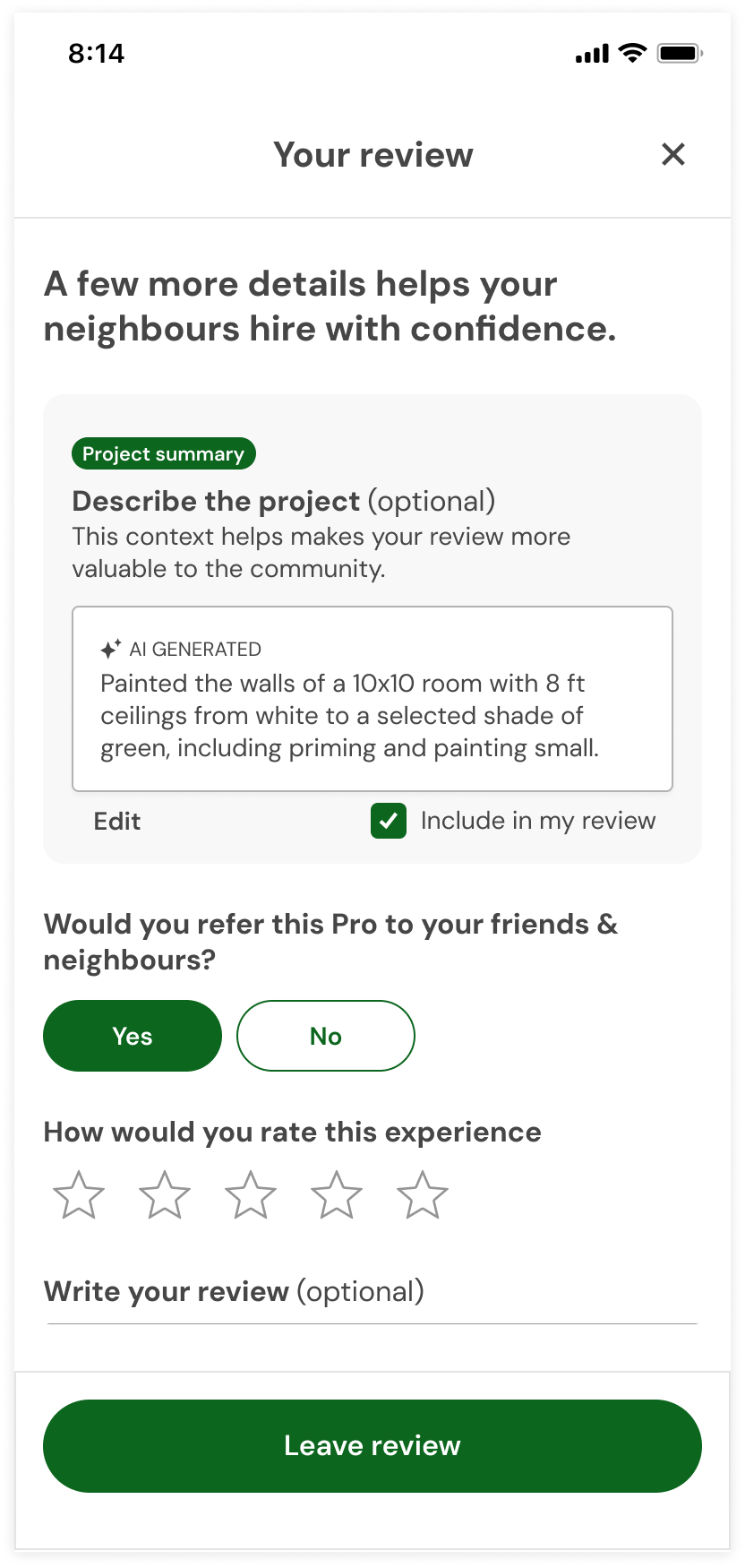
Local referrals are at the heart of Quartermaster. Homeowners can leave feedback at any stage of a project, rather than waiting until the job is complete. To give each review some context, AI generates a short project summary based on the details the homeowner shared, which they can edit or omit.
Reviews also connect to Home Team, a feature developed by another team that lets homeowners save the Pros they trust. A positive experience is a natural moment to add a Pro to Home Team, making it easier to pick up where they left off when the next job comes around.
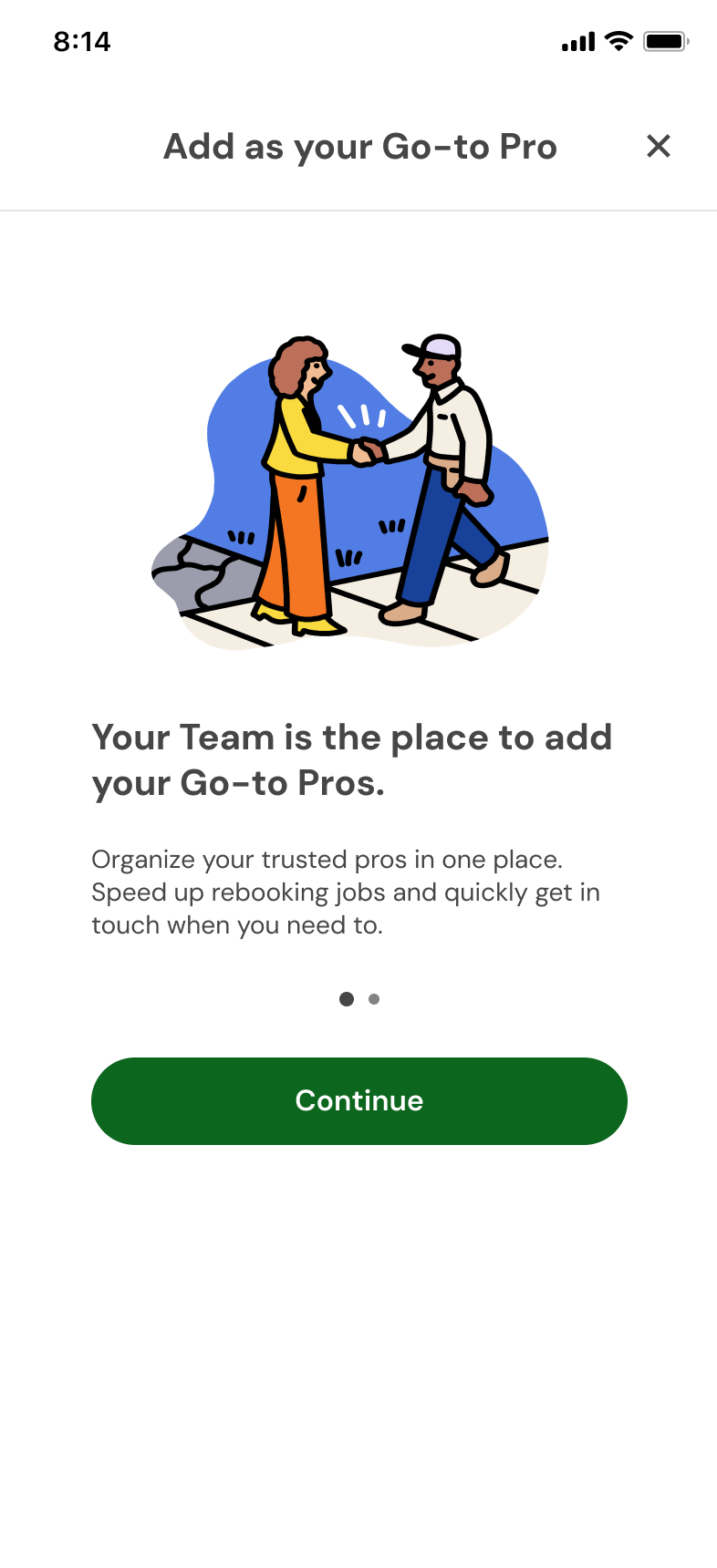
The next job starts with context
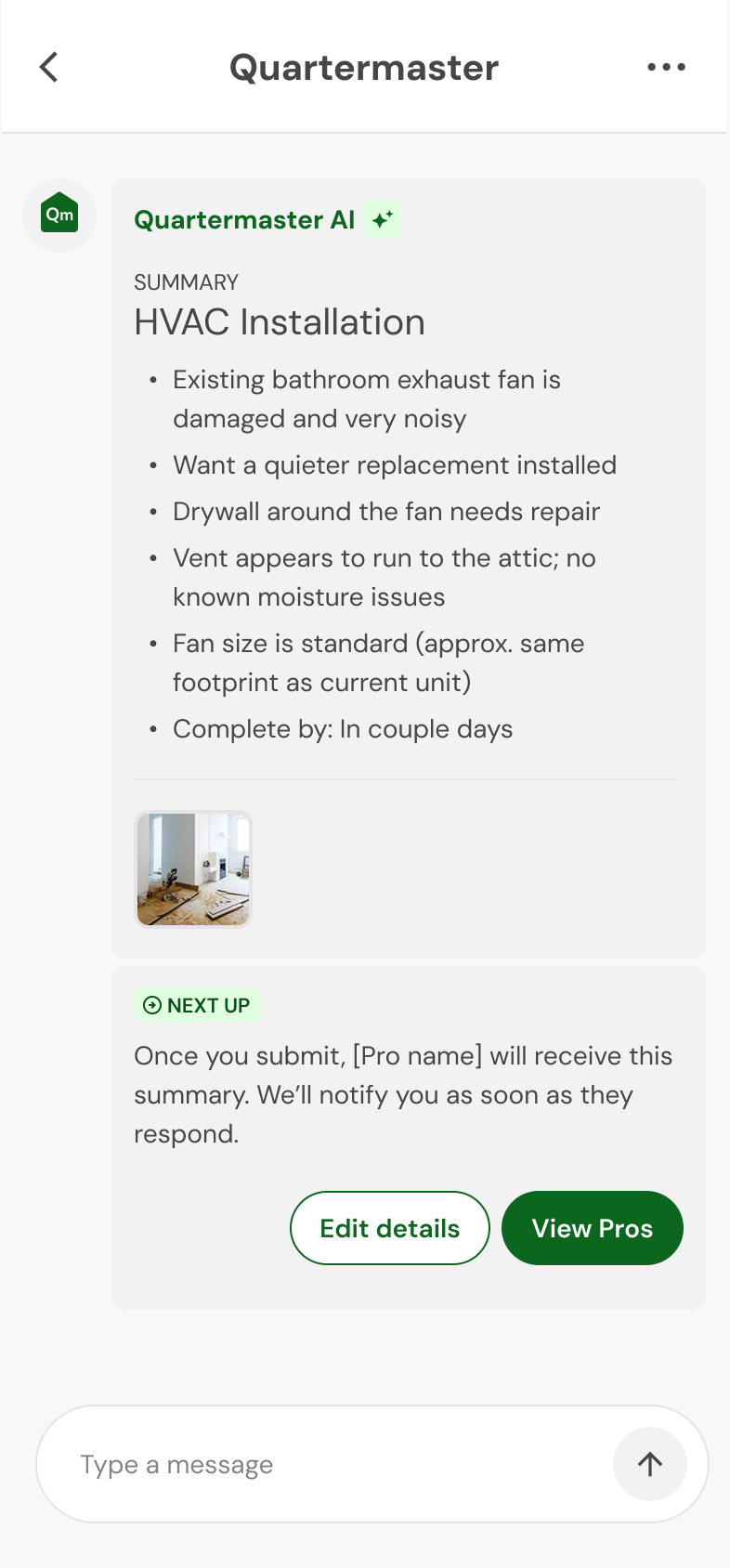
The project brief stays with the homeowner beyond the initial request. It provides the information Pros need, carries into the project workspace, and can be reused for future work.
When a homeowner returns, the AI assistant uses the previous brief as a starting point, asking what has changed rather than collecting the same information again. This applies to rebooking a Pro, extending an existing project, or requesting a new service.
What we parked
Drafts turned into a question about AI
When we tested a draft state for projects that needed more planning, participants expected AI to be built in: help choosing materials, sequencing the work and deciding what to ask contractors. That changed the problem from storing unfinished requests to helping homeowners define the project. Doing that well was beyond the release scope, so we deferred drafts until we could build them with AI assistance.
Four levels of depth for every block
Mobile ordering settled which block came first, but not how much of each to show. I defined every block at four levels, from a one-line minimized state to a full maximized view, so the dashboard could expand what mattered at each stage and collapse the rest. We deprioritized this logic because of its engineering cost and chose to test the fundamental components first.